What does it mean to grow up navigating two cultures, two sets of expectations, and two very
different definitions of what it means to live a “good” life?
In my work with bicultural clients—newcomers, first-generation immigrants, and people raised
in multicultural households—I’ve witnessed the invisible balancing act they perform daily. My
latest video, “Between Two Worlds: The Struggles & Strengths of Bicultural Identity,” unpacks
this delicate dance and offers language to describe the quiet tension many feel, but don’t always
know how to express.
The experience of biculturalism isn’t just about language—it’s about values.
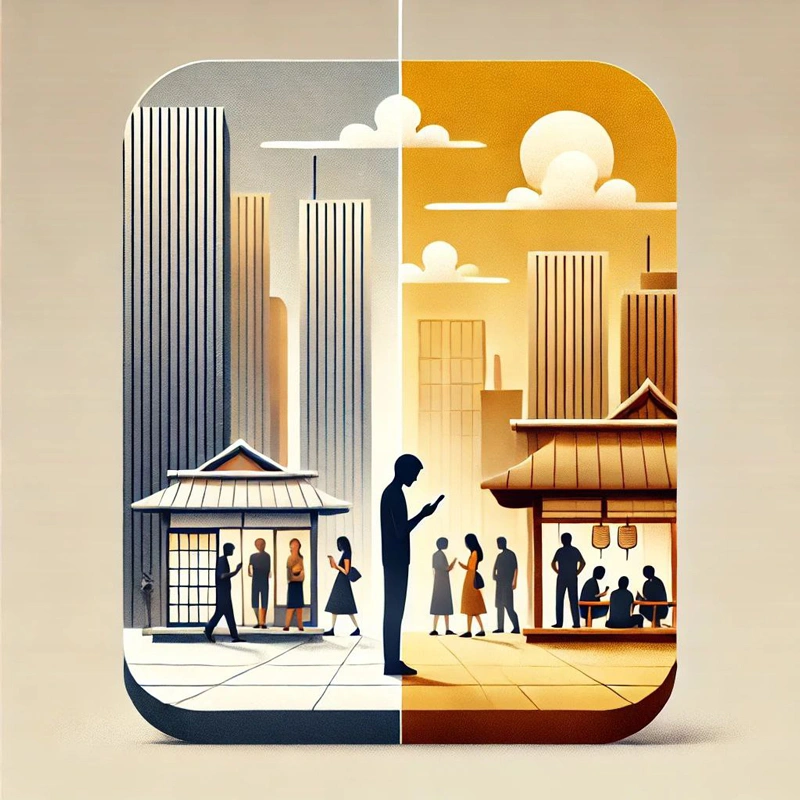
On one side, you may be taught to prioritize family, community, and harmony. On the other,
you’re encouraged to speak up, stand out, and chase your individual goals. In one world, you’re
expected to blend in; in the other, to shine. Both value systems come with wisdom—but when
they conflict, it can leave you wondering who you’re supposed to be.
Even self-care becomes a cultural negotiation.
You light a candle and carve out a quiet moment, only to be interrupted with requests for help,
advice, or support. For many, service to family isn’t just encouraged—it’s expected. And
sometimes, putting yourself first feels like betrayal, not balance.
Gratitude becomes complicated.
Immigrants are often told to be thankful—thankful for opportunity, for safety, for a new
beginning. But this well-meaning message can silence real struggle. It can make you question
whether you’re “allowed” to feel overwhelmed or unfulfilled. It can create a pressure to succeed
by other people’s standards, even when it means abandoning your own.
These conflicting messages can erode confidence. You start questioning your voice in meetings,
hesitating to correct a mispronounced name, or hiding parts of yourself to avoid standing out too
much—or not enough.
And yet, there’s power in living between worlds.
Bicultural individuals often develop a rare skill: the ability to read the room, see multiple
perspectives, and build bridges where others see walls. You learn how to blend tradition with
growth, community with independence, and self-expression with respect.
This identity isn’t something to fix. It’s something to honor.
If you’ve ever felt like you’re switching masks, adjusting your volume, or walking a tightrope
between two sets of values, you’re not alone. This experience is real—and it’s shared. But it’s
also filled with wisdom, resilience, and the capacity to lead across cultures with empathy and
strength.
The goal isn’t to choose between cultures.
It’s to create a life that reflects all of who you are.
Your story matters. And the way you move between worlds? That’s not confusion—it’s a kind of
fluency. And the world needs more of it.